
// SAFE TRADING
How to trade airsoft gear safely.
Buying and selling gear is half the fun of airsoft, and almost always smooth. A few simple habits keep it that way, whether you're the buyer or the seller.
Spotting a dodgy deal
The vast majority of traders are genuine. The handful who aren't tend to share the same tells:
- Stock photos or images that show up elsewhere online, with no original firing video.
- A price that's suspiciously low for the item.
- Pressure to pay fast, off-platform, with an irreversible method.
- A brand-new account with no history or feedback.
- Vague answers about condition, FPS or what's included.
- Bank details in someone else's name, with an explanation ready for why. A flatmate's account, a partner's account, or being told the name "sometimes doesn't match" are all the same warning sign.
- Feedback that all arrived at once, or a single glowing review from an account created the same day.
If you're buying
- Ask for clear, well-lit photos from several angles, plus a short video of it firing.
- Confirm the FPS, the condition, and exactly what's included: battery, magazines, accessories.
- Ask why they're selling and how long they've owned it.
- Where you can, meet locally and test before you pay.
- Keep a record of what was agreed.
If you're selling
A good listing sells faster and protects you from disputes. Be the seller you'd want to buy from:
- Clear photos from multiple angles, in good light, plus a firing video.
- State category, condition and FPS honestly and flag any wear or issues up front.
- List everything included so there are no surprises.
- Set a fair price and be straight about it.
- Confirm the buyer meets any age requirements before you trade.
Meeting safely
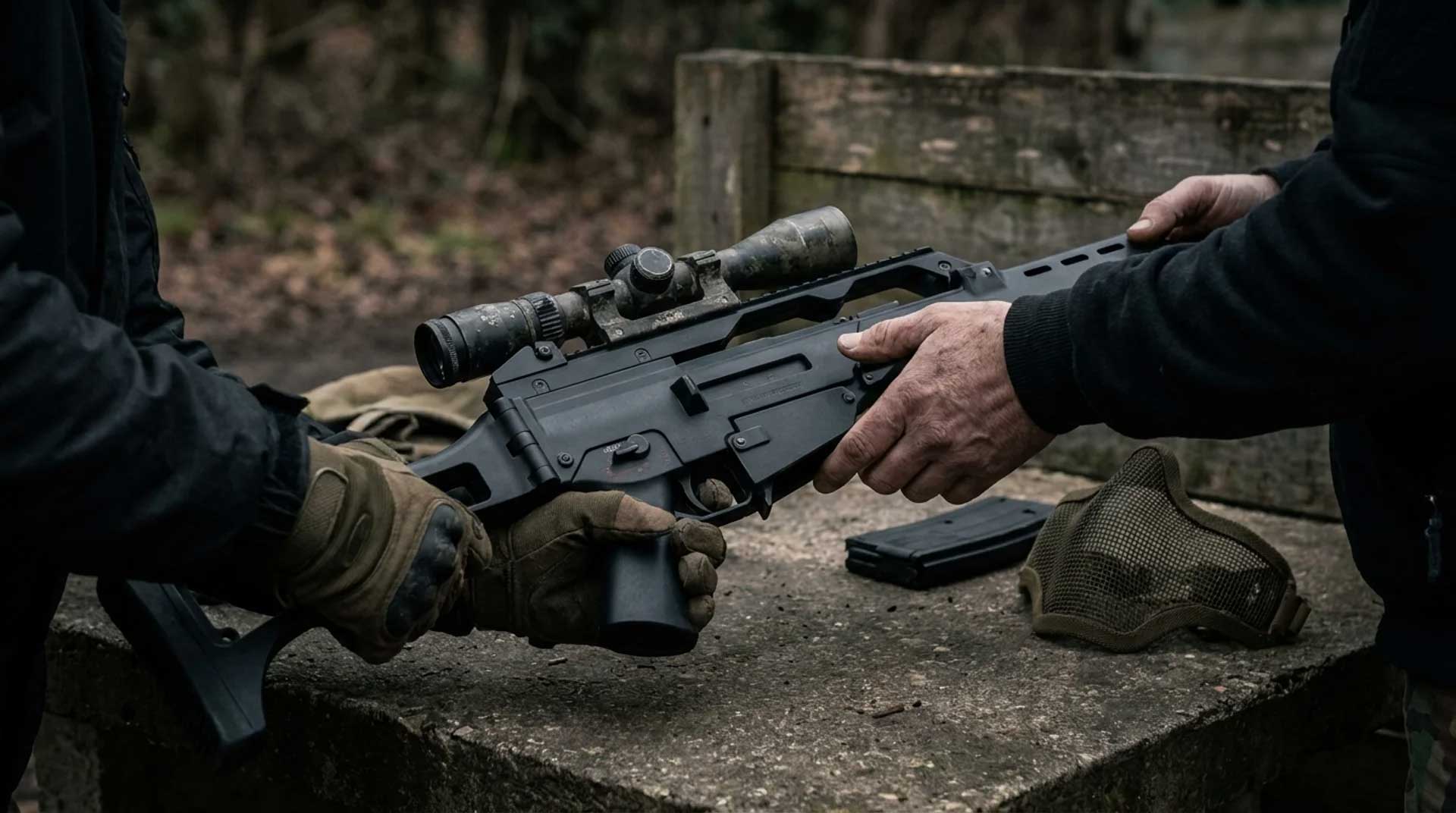
For local deals, a busy public place in daylight is ideal. A club night or field day is even better: you're surrounded by other players and can test the replica on the spot before any money changes hands. Bring someone with you if you can, and let a mate know where you're going.
If you don't know the seller personally, take a moment to verify them through community channels first. Check whether they're a recognised member in your local club's Facebook group, forum, or Discord. Someone who is active in the community and vouched for by other players is far lower risk than an anonymous account with no history.
Paying safely
How you pay matters. Here's how the common options stack up:
- In person, cash or bank transfer on the day. The safest option for local trades. Inspect and test the gear first, pay when you're happy. There's no dispute to resolve if you've held it in your hands.
- Bank transfer for remote trades. Bank transfer is the most common payment method in NZ, but it offers no buyer protection once the money is sent. Only use it for remote trades if you have genuinely verified the other party: confirmed through your club's official channels, have an established feedback history, or know them personally. If something goes wrong, recovering funds from a bank transfer is very difficult. Before you send anything, check that the name on the account is the person you've been dealing with, and read the warning below.
- PayPal Goods and Services. PayPal's Goods and Services option gives both buyers and sellers a dispute process and some protection if a deal goes wrong. It's the better choice when you're trading with someone you don't know. That said, PayPal isn't widely used in NZ the way it is in the US or Europe (we never had the same eBay ecosystem to drive adoption), so not every seller will have an account or be comfortable with it. Worth offering as an option, and worth asking about as a buyer. Note: PayPal Friends and Family removes all buyer protection, so always confirm you're using Goods and Services.
Worth knowing the limit of that check, though. If your bank says the name does match, all that proves is the account really belongs to whoever is named on it. It does not prove that person is your seller. Scammers use accounts in other people's names, and those accounts pass the check perfectly. So the question is not "did my bank say it matched", it's "is this account in the name of the person I'm buying from". A match against a name you've never heard before is not a green light.
Verify the person, not just the gear
Photos and prices are easy to fake. People are harder. Ask for a photo of the seller holding their ID next to the item, in the same frame. A licence copied off the internet can't pass that, and a genuine seller won't mind. If they'll send you an ID but won't be photographed with it, that tells you something on its own.
Better still, deal with people your club can vouch for. On TradeSoft, clubs add their own members, so a club badge on a profile means real people who know that person are willing to stand behind them. It's the one thing a throwaway account can't manufacture. If you're not already linked to your club, ask your committee to add you.
For sellers shipping gear
If you're posting a replica to a buyer, always use a tracked and signed-for delivery service. This protects you if there's a dispute about whether the item arrived or arrived as described. Share the tracking number with the buyer as soon as you've shipped, and keep your proof of postage until the deal is fully settled.
Transporting replicas
Carry replicas discreetly: in a bag or case, out of sight, never openly in public, where they can be mistaken for the real thing. For a refresher on the rules around ownership and carrying, see our guide to airsoft law in New Zealand.