
// GEAR EXPLAINED
Green gas vs CO2 vs propane vs HPA.
If your replica runs on gas, what you feed it changes how it shoots, how it handles the cold, and how much it costs to run. Here is how the four common options compare.
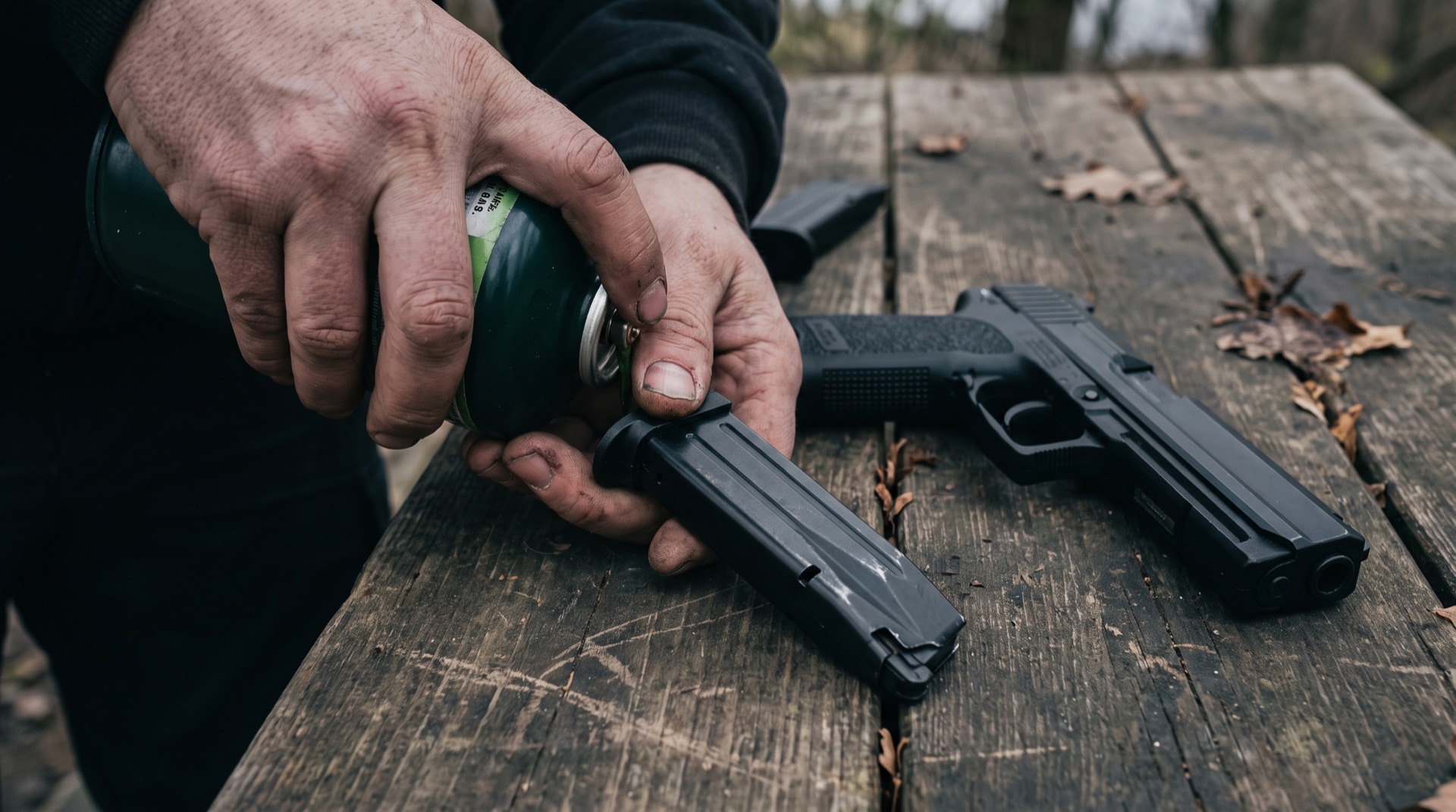
Green gas
Green gas is the default for most gas guns. It is essentially propane with a small amount of silicone oil added, packaged in a can with a fill nozzle. You charge the magazine directly from the can. It runs at a moderate pressure that suits most gas blowback pistols and rifles out of the box.
- Good for: most GBB pistols and rifles, easy day-to-day use.
- Pros: convenient, self-lubricating, gentle on seals, cheap per fill.
- Cons: pressure drops in the cold, so winter performance suffers.
CO2
CO2 usually comes in small disposable capsules that load into the magazine. It runs at a higher pressure than green gas, which gives more power and, importantly, much better performance when it is cold.
- Good for: colder days, players wanting more power and consistency.
- Pros: hits harder, handles cold far better, convenient capsules.
- Cons: higher pressure stresses seals more, and only use it in guns rated for CO2. Check your field's FPS limits.
Propane (the budget route)
Since green gas is really just propane plus oil, plenty of players run raw propane straight from a camping bottle using a cheap adaptor. The gas is almost the same, and a big propane bottle costs a fraction of the equivalent in green gas cans, so it is a lot cheaper over time.
The catch is lubrication. Green gas carries silicone oil to keep the seals supple. Raw propane does not, so if you run it dry the seals can dry out, crack and start leaking. The fix is simple but not optional: add a few drops of silicone oil into the fill valve regularly, or fit an inline oiler to the adaptor, so every fill carries lubricant. Do that and propane is an excellent, cheap option. Skip it and you will be replacing seals.
- Good for: players who shoot a lot of gas and want to cut running costs.
- Pros: much cheaper than green gas, performs almost identically.
- Cons: you must add silicone oil yourself, or the seals suffer.
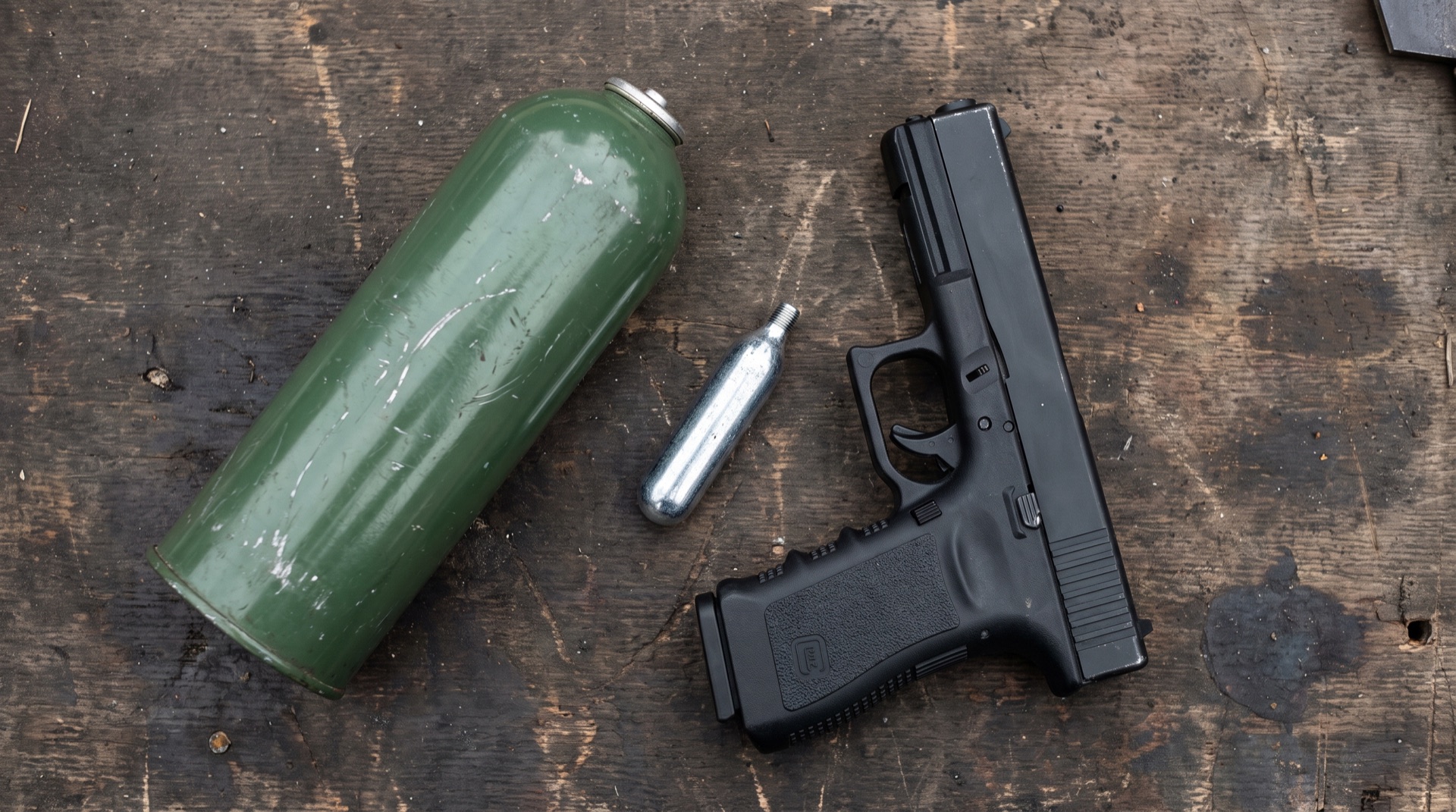
HPA (high pressure air)
HPA takes a different approach: a compressed air tank feeds the gun through a regulator and a line. Because the regulator sets the pressure precisely, HPA delivers extremely consistent shots and is completely unaffected by temperature. Many serious players run HPA-converted AEGs for exactly that consistency and tuneability.
- Good for: players chasing consistency and fine FPS control.
- Pros: rock-solid consistency, tuneable, no cold-weather drop-off.
- Cons: higher up-front cost, and you carry a tank connected by a line.
Which should you use?
- Just want it to work, out of the box: green gas.
- Cold days or more power (in a rated gun): CO2.
- Shoot a lot and want it cheap: propane, with silicone oil added.
- Consistency and tuning above all: HPA.
Whatever you feed it, keeping the seals lubricated and the gun clean is what makes a gas replica last. Our airsoft maintenance guide covers that, and if you are still choosing a gun type, start with AEG vs gas vs spring.